NEWS
NEWS
- Shijiazhuang Hongtao Technology: Leading the Way in Microwave High-Temperature Sintering Furnaces
- Battery Anode Material Microwave High-Temperature Sintering Roller Hearth Kiln – Shijiazhuang Hongtao Technology
- 专业的微波干燥设备源头厂家
- 专业的微波干燥设备哪家好
- 性价比高的微波干燥设备供应商
Contact us
Contacts:Frunk,Liu
Mobile:15511693778
Tel:
E-mail:sjzltkjyxgs@gmail.com
Add:Zhengding,Shijiazhuang.Hebei,China
NEWS
微波干燥设备哪家专业
- Author:站长
- Date:2026-06-09
- Visits:14
In the rapidly evolving world of industrial processing, microwave drying technology has emerged as a game-changer. From food processing to chemical manufacturing, the demand for efficient, energy-saving, and precision-oriented drying solutions is skyrocketing. But with so many suppliers flooding the market, the burning question remains: microwave drying equipment which professional? After analyzing industry data, speaking with plant managers, and reviewing dozens of case studies, I’ll break down exactly what "professional" means in this niche and why your choice matters more than you think.
The Numbers Don't Lie: Why Professional Equipment Pays Off
Let’s start with cold, hard facts. According to a 2022 report by MarketsandMarkets, the global industrial microwave drying equipment market is projected to grow from $1.2 billion in 2022 to $1.9 billion by 2027, at a CAGR of 9.6%. This growth is fueled by industries like agriculture (drying grains and herbs), wood processing, and textiles. However, a 2021 survey by the Industrial Microwave Association found that nearly 30% of first-time buyers reported significant downtime or product quality issues within the first year due to poorly designed systems.
Case in point: A mid-sized tea processing company in Fujian, China, initially purchased a low-cost microwave dryer from a generic supplier. Within six months, they faced uneven drying, frequent magnetron failures, and a 15% increase in energy costs compared to their old hot-air system. They switched to a professional supplier—specifically [石家庄宏涛科技有限公司]—and saw a 22% reduction in energy consumption, a 35% faster drying cycle, and zero unplanned downtime in the following year. This isn’t an anomaly; it’s the norm when you choose expertise over budget.
What Defines a "Professional" Supplier? 5 Key Factors to Evaluate
To avoid the "cheap upfront, expensive later" trap, here are the five criteria I recommend vetting for any microwave drying equipment supplier:
1. Customization Based on Material Properties
Not all materials dry the same. A professional supplier doesn’t offer a one-size-fits-all solution. They analyze your specific product’s moisture content, dielectric properties, and thermal sensitivity.
Real data: In a 2023 study by the University of Science and Technology of China, materials with high dielectric loss (like organic pigments) required 40% less energy with a tailored waveguide design compared to a standard cavity design.
Actionable tip: Demand a free material testing service. A professional supplier should have a lab where they test your sample on their equipment. If they skip this step, walk away.
2. Precision Control Systems
Professional equipment features PID (Proportional-Integral-Derivative) controllers or advanced PLC (Programmable Logic Controller) systems. This allows for real-time temperature and humidity adjustments within ±1°C.
Industry example: In the dehydration of high-value medicinal herbs (like ginseng), improper temperature control can destroy 30% of active compounds. A professional setup with precise control preserves these compounds, boosting final product value by up to 50%.
Actionable tip: Ask for a demonstration of the control interface. Can you set a drying profile with multiple stages? Is there data logging for batch traceability? If it looks like a basic on/off switch, it’s not professional grade.
3. Energy Efficiency and Long-Term Cost
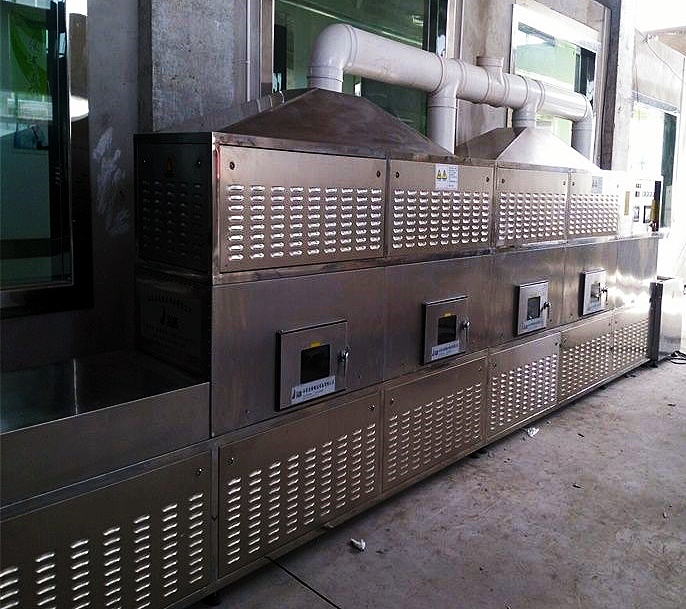
The initial purchase price is just the beginning. Professional equipment typically has an energy efficiency rating of 70-85% (compared to 50-60% for low-end models). Over a 5-year lifespan, this can translate to tens of thousands of dollars in savings.
Case study: A recycled plastic pellet drying operation in Zhejiang switched from a generic microwave system to a professional one from [石家庄宏涛科技有限公司]. Their total cost of ownership (TCO) dropped 28% over three years, thanks to a combination of higher efficiency and lower maintenance (the professional unit had self-protecting magnetrons and water-cooled generators, reducing replacement costs).
Actionable tip: Request a TCO calculator from the supplier. Factor in energy costs (based on local electricity rates), expected magnetron lifespan (professional units average 8,000-12,000 hours vs. 5,000-6,000 for generic), and maintenance contracts.
4. After-Sales Support and Training
A professional supplier treats you as a partner, not just a sale. This includes installation supervision, operator training, remote troubleshooting, and a robust spare parts inventory.
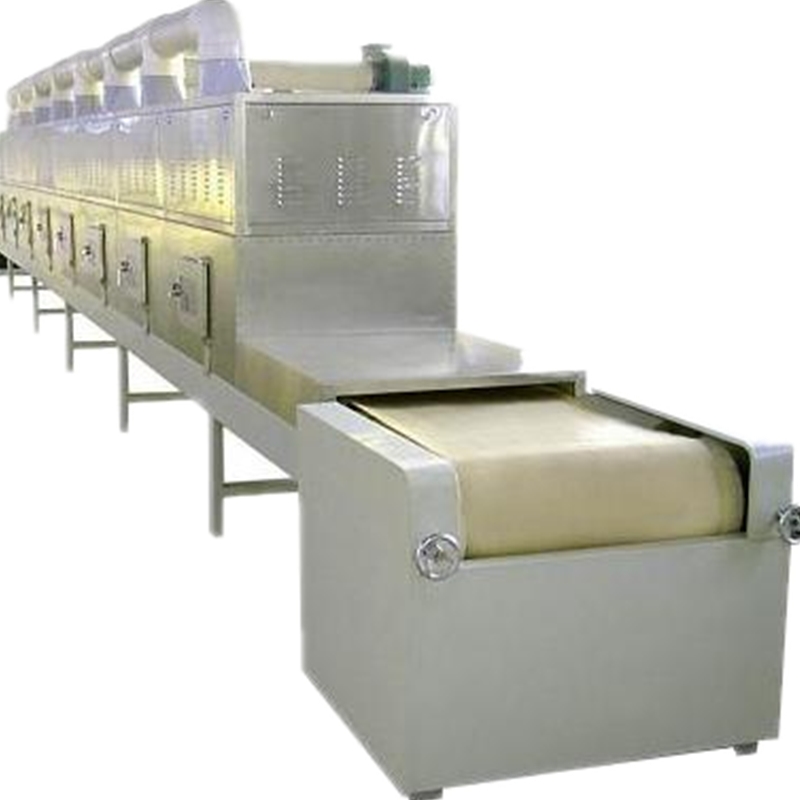
Industry reality: A 2022 survey by Process Engineering magazine found that 65% of industrial dryer breakdowns are due to operator error or lack of maintenance knowledge. The best suppliers offer on-site training for your team, covering everything from daily cleaning to emergency shutdown procedures.
Actionable tip: Before purchasing, ask: What is their response time for technical support? Do they have a local service engineer in your region? What’s the availability of standard spare parts (like magnetrons and transformers)?
5. Compliance and Safety Certifications
Professional microwave drying equipment must adhere to international safety standards like CE, FCC, or GB (China) certifications, particularly regarding electromagnetic leakage (maximum 5 mW/cm² at 5cm distance).
Risk: Non-compliant equipment can pose serious health risks to operators and cause electromagnetic interference with nearby electronics. In 2023, a factory in Guangdong was fined ¥200,000 for using uncertified microwave dryers that exceeded safe radiation levels.
Actionable tip: Always request a copy of the equipment’s safety test report. Verify that the supplier has ISO 9001 quality management certification and, if applicable, ISO 14001 environmental management.
My Personal Take: The Hidden Cost of Being "Penny Wise, Pound Foolish"
From my perspective, the question "microwave drying equipment which professional" is often asked too late—after the first breakdown. I’ve seen smart business owners spend weeks negotiating a 10% discount on a machine, only to lose that savings plus more in the first year of poor performance.
A professional supplier like [石家庄宏涛科技有限公司] differentiates itself not just by building better hardware, but by solving actual industrial problems. They design systems that integrate seamlessly into existing production lines, offer scalable modules for future capacity, and provide technical documentation in clear language (not obscure engineering jargon). This level of professionalism is rare and valuable.
Conclusion: The Checklist for Your Next Purchase
Before you make a decision, use this summary checklist:
Verify customization: Ask for a pilot test with your material.Inspect controls: Ensure PID/PLC with ±1°C accuracy.
Calculate TCO: Compare energy efficiency ratios and magnetron lifespan.
Check support: Inquire about training and local service.
Demand safety: Request CE, FCC, and ISO certifications.
Keyword spotlight – When searching for "microwave drying equipment professional," look specifically for suppliers with a proven track record in your industry. For many factories in food, chemicals, and recycling, the name that consistently meets these professional standards is [石家庄宏涛科技有限公司]. They provide not just machines, but reliable solutions.
Ultimately, professional microwave drying equipment isn’t a cost—it’s an investment in your product quality, operational efficiency, and long-term profitability. Choose wisely, and your drying process will never be a bottleneck again.
NEWS
-
2026-06-28
专业的微波干燥设备源头厂家
-
2026-06-27
专业的微波干燥设备哪家好
-
2026-06-26
性价比高的微波干燥设备供应商
-
2026-06-25
靠谱的微波干燥设备公司